Once again, rumors are swirling that Nvidia won’t launch any new gaming GPUs in 2026 — and this time, the claim comes from a more heavyweight source.

According to The Information, Nvidia is planning to skip releasing new GeForce graphics cards this year, largely due to the ongoing memory shortage that also affects video RAM. If accurate, this would mark the first time in roughly 30 years that Nvidia hasn’t introduced a new gaming GPU, whether a full new generation or even a minor refresh such as a “Super” model.
The report cites two sources with direct knowledge of Nvidia’s plans, both of whom claim the company is prioritizing memory supplies for its AI-focused GPUs rather than consumer gaming cards, simply because the profit margins are far higher in the AI space.
The Information also states that Nvidia is reducing production of its existing RTX 5000 series GPUs, though it doesn’t specify by how much. The implication, however, is that the cuts are meaningful rather than marginal.
As always, these claims should be treated with caution. Nvidia declined to comment directly on the rumors, but told The Information that it continues to ship GeForce products and is working closely with suppliers to maximize memory availability. That’s the same line Nvidia used previously when rumors suggested the RTX 5070 Ti had been quietly dropped from production — a claim the company firmly denied.
Analysis: mounting signs of delays and production cutbacks
These latest reports add weight to rumors that have been circulating for some time. Multiple leaks have already suggested Nvidia is scaling back GeForce GPU production, with some estimates placing the reduction at around 15% to 20%. While The Information doesn’t attach a specific figure, the fact that production cuts are being discussed at all suggests something substantial may be happening behind the scenes.
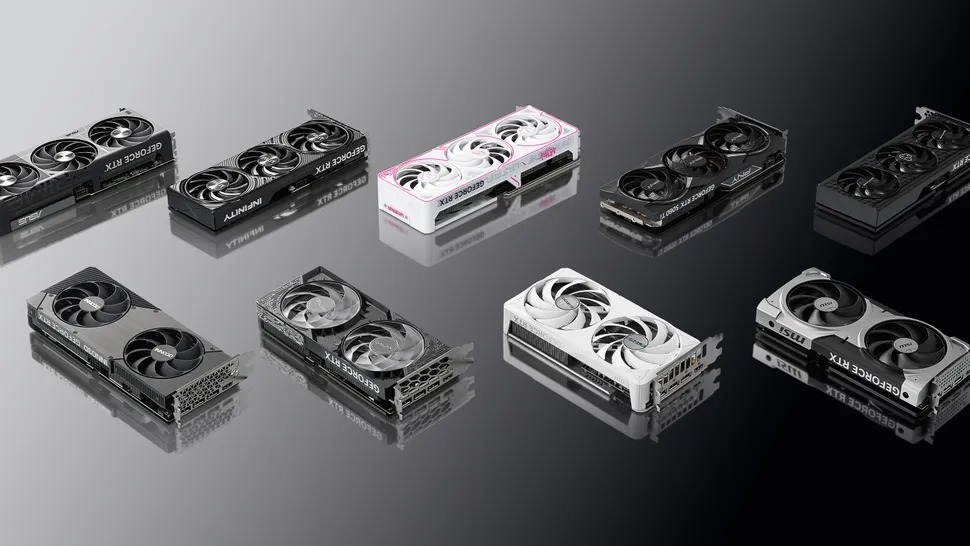
Separately, a well-known leaker on X — the same source that previously mentioned a 20% production drop — has also claimed that Nvidia will release no new gaming GPUs in 2026. With two independent reports now pointing in the same direction, including one from a well-established outlet, the possibility starts to look more credible.
The report also reveals that Nvidia had been planning a mid-cycle refresh of the RTX 5000 lineup, internally codenamed “Kicker.” The design work for these refreshed cards was reportedly completed, but Nvidia is said to have delayed the project in December 2025, with no revised launch window mentioned.
That delay could ripple further into Nvidia’s roadmap. The RTX 6000 generation was previously expected to enter mass production toward the end of 2027, but that timeline now appears uncertain. If pushed back, it could mean the next major GeForce generation doesn’t arrive until 2028 — though this hasn’t been confirmed.
The “Kicker” refresh is widely believed to refer to the rumored RTX 5000 Super cards. Speculation has pointed to an RTX 5070 Super, RTX 5070 Ti Super, and RTX 5080 Super, all featuring significantly increased VRAM capacities — potentially 18GB on the 5070 Super and 24GB on the higher-end models.
Given ongoing VRAM shortages, it’s easy to see why Nvidia might hesitate to launch these upgrades. More memory-heavy GPUs would only increase pressure on already constrained supply chains.
That likely puts an end to hopes of seeing RTX 5000 Super cards in 2026. More concerning, however, is the knock-on effect for pricing. If supply continues to shrink while demand remains strong, existing GeForce GPUs could see further price increases over time.
Unfortunately, Nvidia’s main rival isn’t offering much reassurance either. Recent rumors suggest both Nvidia and AMD may be shifting production toward 8GB graphics cards rather than 16GB models, particularly in the mid-range. That’s a frustrating prospect for many gamers, who increasingly view 8GB of VRAM as insufficient for modern titles.
For now, it appears the gaming GPU market may be heading into a quiet — and potentially expensive — year.