When it comes to choosing the best TVs, the usual trade-off is well known: OLED delivers top-tier picture quality, while mini-LED offers higher brightness at a lower price. Now, LG Display may be about to shake things up with a new OLED panel technology called OLED SE.
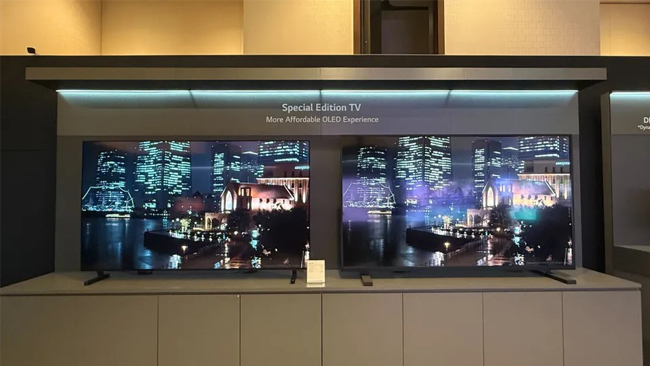
OLED SE is aimed squarely at entry-level OLED TVs. While it’s nowhere near as advanced as the Primary RGB Tandem OLED panels found in flagship models like the LG G5, it could be a major boost for more affordable OLED sets such as the LG B-series.
Like the panel used in the LG B5, OLED SE supports a 120Hz refresh rate. The big difference is brightness. LG Display claims OLED SE can reach up to 1,000 nits, a noticeable jump from the roughly 668 nits measured on the B5.
That said, LG Display’s brightness claims should be taken with a pinch of salt. The company previously stated that the Primary RGB Tandem OLED panel in the LG G5 could reach 4,000 nits, yet real-world testing topped out at around 2,268 nits. Whether OLED SE can truly hit 1,000 nits in everyday use remains to be seen.
Even so, this development could make OLED far more appealing to budget-conscious buyers who typically lean toward mini-LED for its better brightness-per-dollar ratio.
How OLED SE makes OLED TVs cheaper
During a Q&A session at CES 2026, LG Display explained that OLED SE retains OLED’s core strengths, including pixel-level dimming, excellent HDR performance, perfect blacks, and ultra-fast response times. According to the company, this allows OLED SE to deliver clearly superior image quality compared to similarly priced LCD TVs.
So where do the savings come from? As reported by What Hi-Fi?, one major cost-cutting move is the removal of the polarizer layer.
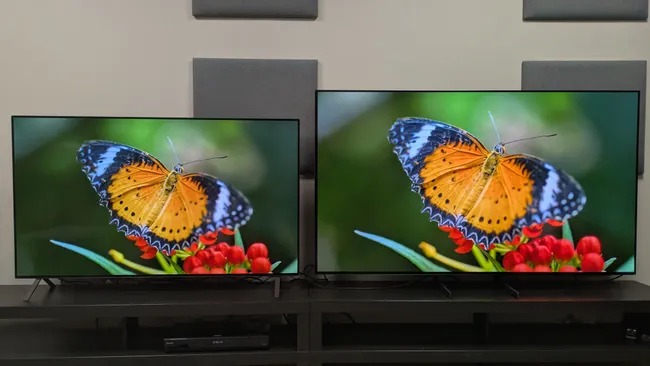
A polarizer helps reduce reflections and glare, but it also absorbs some light, lowering overall brightness. By eliminating it, LG Display can both reduce manufacturing costs and increase brightness. The trade-off, of course, is a more reflective screen surface.
TV brands can counter this by applying their own anti-reflective solutions, such as an alternative polarizer or a matte coating similar to the one used on Samsung’s S95F — which is reportedly inexpensive to implement. These additions could help balance cost, brightness, and glare control.
LG Display doesn’t make panels exclusively for LG. It also supplies OLED panels to major brands including Sony, Samsung, Panasonic, Hisense, and Philips. The company has confirmed that OLED SE panels will be shipped to “major customers” throughout 2026.
According to LG Display, OLED SE will initially be produced in five sizes: 48, 55, 65, 77, and 83 inches. Those sizes line up perfectly with the current LG B5 lineup and also happen to be the most popular sizes in the mid-range and premium TV market.
Because of that, it seems highly likely that OLED SE will power the LG B6. However, LG has indicated that more details about that model probably won’t surface until spring.