By now, you’ve almost certainly heard about AI’s growing appetite for hardware — especially how massive AI data centers are soaking up enormous amounts of RAM. That surge in demand is spilling over into the consumer market, driving up prices, straining supply, and even raising environmental concerns. If you’re shopping for a laptop in 2026, it’s not exactly great news.
We’re already seeing the effects. Framework, the laptop company best known for its modular, user-upgradeable machines, has increased the price of RAM on its website not once, but twice. That’s a pretty clear signal that memory prices are heading in the wrong direction.
The timing couldn’t be worse
RAM isn’t just getting more expensive — it’s also becoming harder to work around. Over the past few years, many laptop manufacturers have quietly removed memory upgrade options altogether. This trend began long before RAM prices went wild, but now the consequences are impossible to ignore.
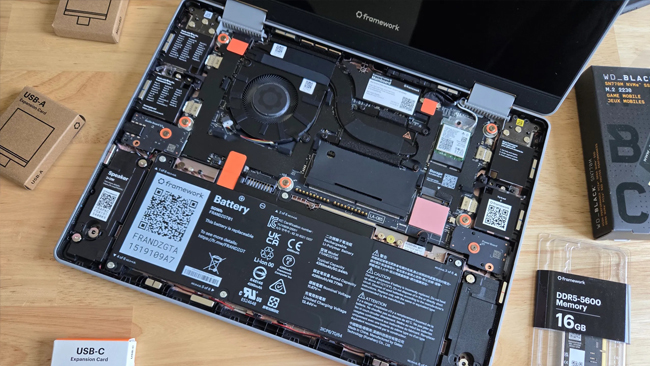
There was a time when buying a base laptop and upgrading the RAM later was totally normal. Memory was affordable, plentiful, and easy to swap. Today, many laptops ship with soldered RAM, locking you into whatever configuration you choose at checkout. What was once a pricing inconvenience is starting to feel like a fundamental design flaw.
Why upgradeable laptops faded away
The explanation isn’t simple, but a major factor is design. Thinner laptops leave less room for removable components, making modular memory harder to implement.
There’s also a business incentive. When upgrades aren’t possible later, manufacturers can charge more upfront for higher memory configurations — and many customers have no choice but to pay.
To be fair, there are legitimate engineering reasons as well. Soldered RAM sits closer to the processor, which improves efficiency and reduces latency. That can translate into better battery life and more predictable performance. Fixed memory also helps with thermal management, which is critical in ultra-thin laptops that have little room for cooling. Performance, after all, depends on staying cool.
Where AI changes the equation
The AI boom didn’t cause laptops to become less upgradeable, but it definitely made the problem worse. When RAM was cheap, soldered memory felt like a reasonable compromise. Once prices spiked and supply tightened, that compromise started to look like a mistake.

With soldered RAM, there’s no option to buy now and upgrade later if prices fall. The AI explosion exposed a core assumption behind modern laptop design: that memory would always be inexpensive and readily available. Turns out, that assumption didn’t age well.
Meanwhile, AI data centers are vacuuming up massive amounts of RAM. That demand trickles down through the supply chain, forcing manufacturers to rethink inventory and pricing. Some companies, like Lenovo, have reportedly stockpiled memory in an effort to keep laptop prices from climbing even higher.
What this means for everyday users
RAM prices have gotten so extreme that some enthusiasts are resorting to wild solutions. One modder has even started salvaging memory chips from old laptop modules and soldering them onto custom desktop DIMMs to save money. That’s creative — but not exactly practical for most people.
For casual users who mainly browse social media or watch YouTube, the RAM crunch might just mean paying an extra $50–$100 for the configuration they want.
For power users, though, the situation is far more painful. Tasks like video editing, running demanding software, or experimenting with AI features can overwhelm laptops stuck with 8GB of soldered RAM. Since upgrading later isn’t possible, the choice is harsh: pay more upfront for a higher-tier machine or accept compromised performance. The harder you push your laptop, the more obvious these limitations become.
What used to be a minor annoyance has turned into a real headache. Higher prices, fewer options, and less flexibility — not exactly a winning combo.
Is laptop upgradeability finished?
The RAM shortage isn’t killing upgradeable laptops outright, but it’s exposing just how rigid most modern designs have become. For many buyers, choice is already limited — full stop.
Still, there’s a bright spot. Companies like Framework show that upgradeability is still possible and still valuable. They’re proof that giving users control over their hardware matters. If there’s one lesson to take away, it’s this: flexibility is something we shouldn’t take for granted.