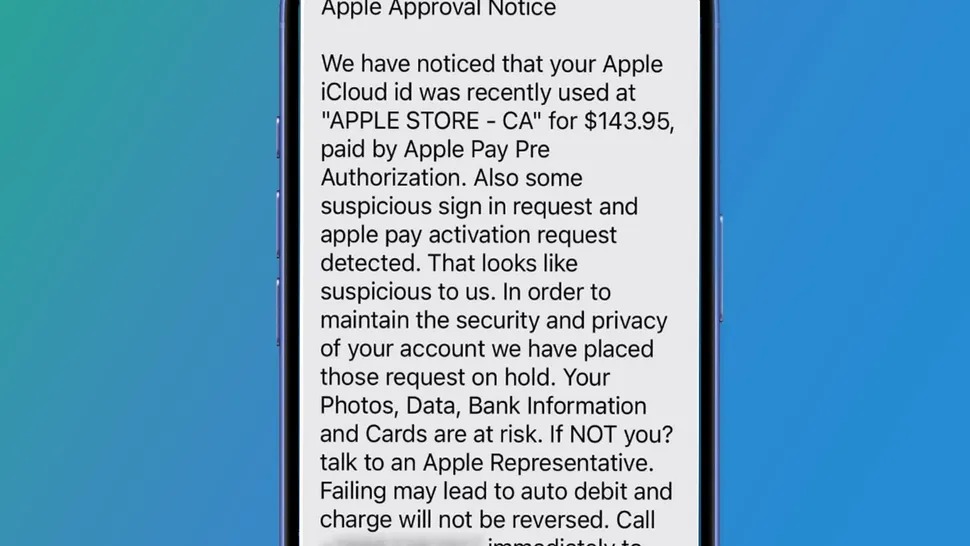
If you’ve recently received an email or text message claiming that a suspicious Apple Pay transaction has been blocked and asking you to call a phone number to fix the issue, don’t do it — it’s almost certainly a scam currently targeting millions of Apple users.
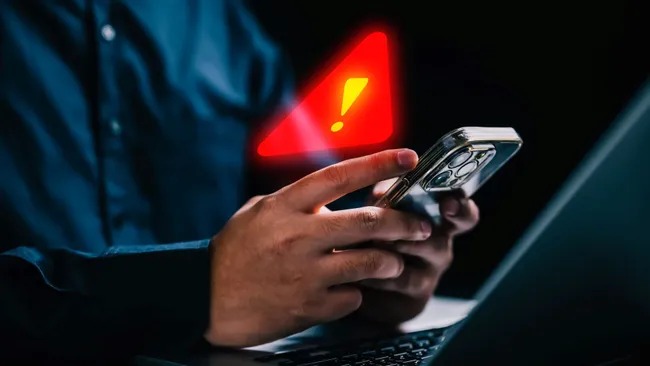
These messages are designed to look legitimate, often using Apple logos, professional layouts, fake case numbers, and official-sounding language. Despite appearances, they’re completely fraudulent and intended to trick recipients into handing over sensitive information or money.
According to a report from AppleInsider, the phishing attempts take several different forms. Some messages warn of a blocked Apple Pay payment, others reference a scheduled appointment, while some claim there’s suspicious activity linked to your Apple ID. Regardless of the wording, the goal is always the same.
The scammers typically claim that a high-value purchase — often worth several hundred dollars — has been attempted using your Apple Pay account. To resolve the issue, you’re urged to call a phone number that the scammers themselves control. The tactic relies on panic: victims worry they’re about to lose a significant amount of money and act without thinking.
Once on the call, the fraudsters pose as Apple representatives and attempt to extract Apple ID credentials, verification codes, or payment details, which can then be used to compromise the victim’s account or steal funds.
How to spot the scam and stay safe
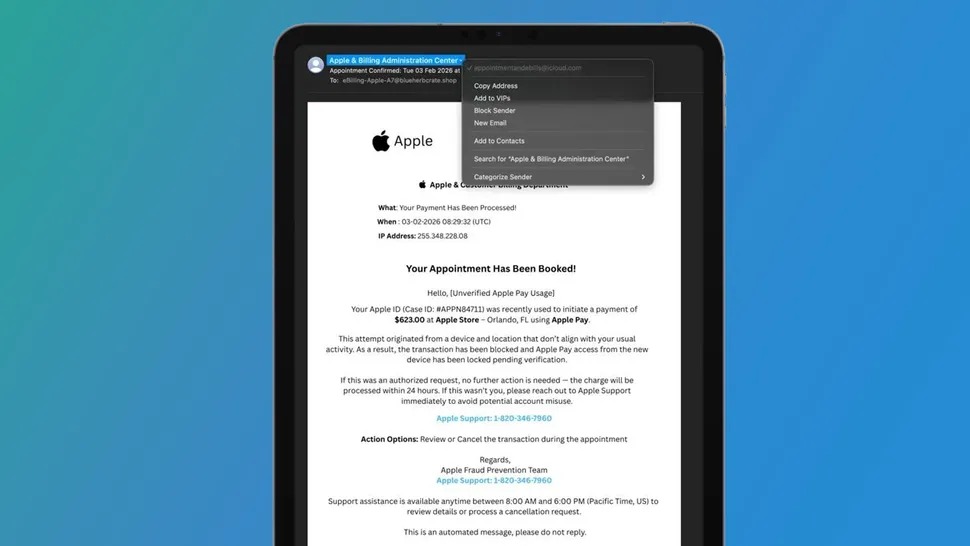
There are several warning signs to watch for. First and foremost, Apple does not send fraud alerts via email or text messages asking you to call a phone number. Any message that does this — even if it claims to be from Apple — should be ignored and deleted immediately. As a precaution, it’s also wise to change your Apple ID password using a password manager.
Always check the sender’s email address carefully. Scam emails often use addresses that look official at a glance but contain subtle misspellings or unusual domain names. Other giveaways include generic greetings like “Hello {Name}” and phone numbers that don’t match Apple’s official support contacts.
The tone of urgency is another major red flag. Apple will never pressure you to act immediately or threaten to lock your account if you don’t respond quickly. That kind of language is deliberately used to make you panic and lower your guard — something legitimate companies avoid.
As one user noted on Apple’s official support forums, Apple itself wouldn’t contact you about a suspicious transaction. Instead, the bank that issued your card would handle it, and suspicious payments are usually blocked automatically. If anything, you’d contact your bank to approve a transaction — not to cancel one.
If you’re ever unsure, visit Apple’s official website and contact support directly from there. Apple can confirm whether there’s any genuine issue with your Apple Pay account or Apple ID.
You can also check your purchase history directly on your device by opening the Settings app, tapping your name at the top, and navigating to Media & Purchases > View Account > Purchase History. This will show whether any questionable transactions have actually occurred.
This isn’t the first time scammers have impersonated Apple with alarming accuracy. Just a few months ago, reports surfaced of highly convincing scams that appeared to originate from real Apple Support accounts. It’s a clear reminder that scams are becoming increasingly sophisticated — and staying alert is your best defense.