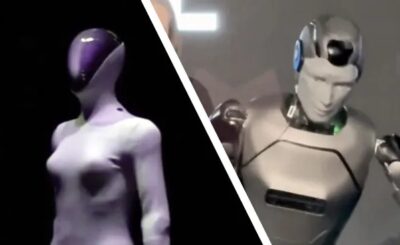
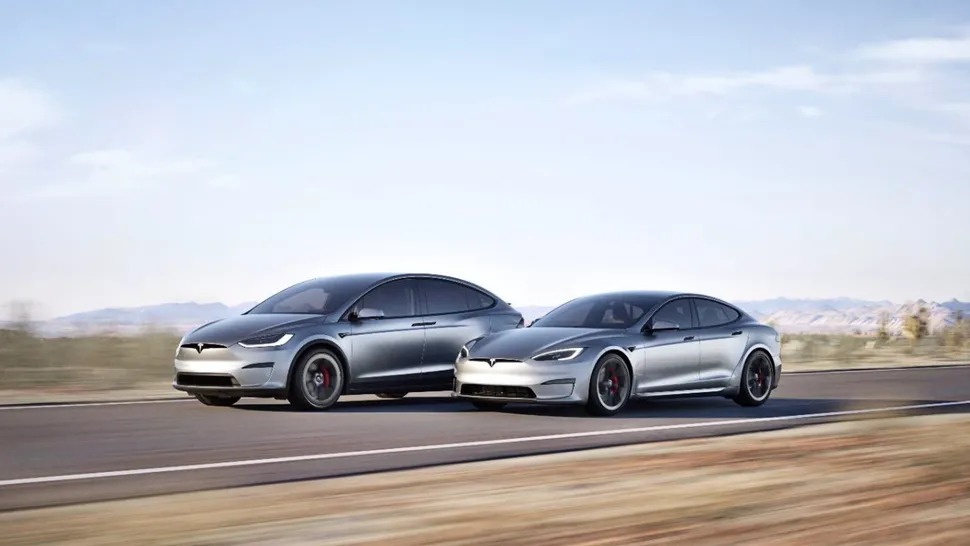
Elon Musk has revealed that Tesla will end production of the Model S sedan and Model X SUV later this year, using the announcement during the company’s latest quarterly earnings call. According to Musk, discontinuing the two long-running models will free up capacity at Tesla’s Fremont, California factory to manufacture the Optimus humanoid robot.
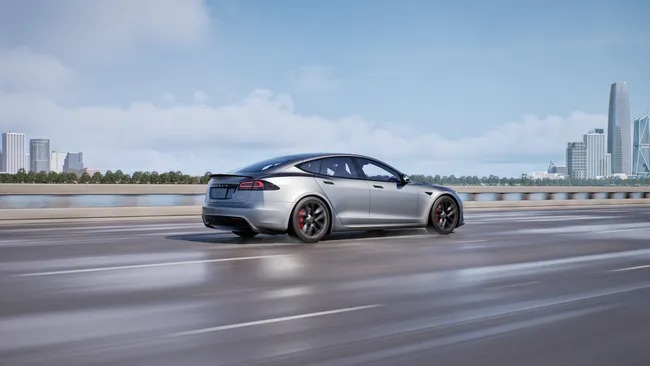
First launched in 2012, the Model S played a crucial role in shaping Tesla’s identity, proving that electric cars could deliver cutting-edge technology, strong performance, sleek design, and a genuinely usable driving range. The Model X followed in 2015, redefining the electric SUV with its distinctive Falcon Wing doors, spacious interior, and class-leading battery tech, all backed by Tesla’s growing charging network.
“It’s time to basically bring the Model S and X programs to an end with an honorable discharge,” Musk said, adding that Tesla is now “moving into a future that is based on autonomy.”
That “autonomy,” however, appears to extend beyond self-driving cars. The production lines currently used for the Model S and Model X are expected to be repurposed for the Optimus humanoid robot, which Musk has positioned as a central part of Tesla’s future.
Beyond the robotics pivot, the decision also reflects declining demand for Tesla’s most expensive vehicles. In recent years, the company has grouped Model S and Model X sales into an “Other Models” category alongside the Cybertruck and Semi, making it harder to track individual performance. However, estimates from Electrek suggest deliveries of the two models have fallen by more than 30% year over year since 2023, dropping below 50,000 units globally in late 2024, with projections potentially as low as 30,000 units in 2025.
Tesla also failed to give the Model S and X the same level of refresh enjoyed by the Model 3 and Model Y. Minor updates last year included new paint options and modest range improvements—but also a $5,000 price increase, pushing the Model S to $84,990 and the Model X to $89,990 in the US. With growing competition from Rivian, Lucid, legacy automakers, and Chinese EV brands, many buyers appear to be looking elsewhere.
Is Tesla moving beyond EVs?
With Tesla’s messaging increasingly focused on AI, autonomy, and humanoid robots, questions are growing over whether Musk’s interest in electric vehicles is fading. The troubled rollout of the Cybertruck adds weight to that concern.
According to Business Insider, Tesla sold just 20,237 Cybertrucks in the US last year—far below Musk’s earlier prediction of 250,000 units annually, and nearly half of the company’s 2024 sales. This is a sharp contrast to Musk’s earlier claim that the Cybertruck was “the best vehicle Tesla has ever made.”
Musk once described the Model S and X as “niche” vehicles back in 2019, calling them of “minor importance” to Tesla’s future. If history repeats itself, the Cybertruck could face a similar fate, potentially leaving Tesla with just two core vehicles: the Model 3 and Model Y.
That lack of lineup depth is unusual for a global automaker, though investors continue to back Musk’s ambitious pivot toward robotics and full autonomy. This support persists despite Tesla’s global EV sales falling 9% in 2025, with European sales dropping by around 28%, according to CBS News.
Much now depends on Optimus, which Musk claims will go on sale in 2027. But given Tesla’s history of delayed launches—most notably the long-awaited Roadster—skepticism remains over whether that timeline will hold.